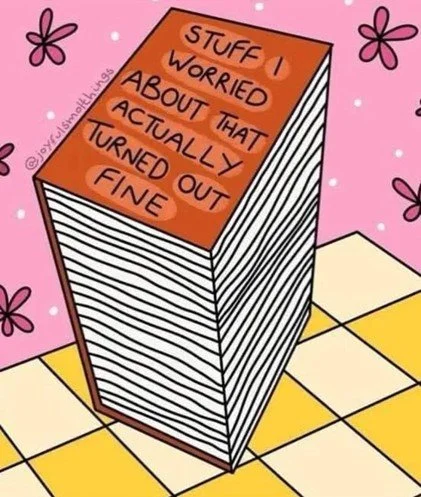
The Lost in France launch is well underway and going swimmingly, despite all my Very Important, Very Necessary Worrying. This is what I picture as I write that, shared by a writer friend, Rebecca Morrison who also launched a book this year, The Blue Dress:
I’m visiting bookstores, and more events are being planned—as soon as the details firm up, I’ll share them. A giant thank you to all the readers and people making those events possible, and even more than that, a success.
Next up: Evermore, July 28
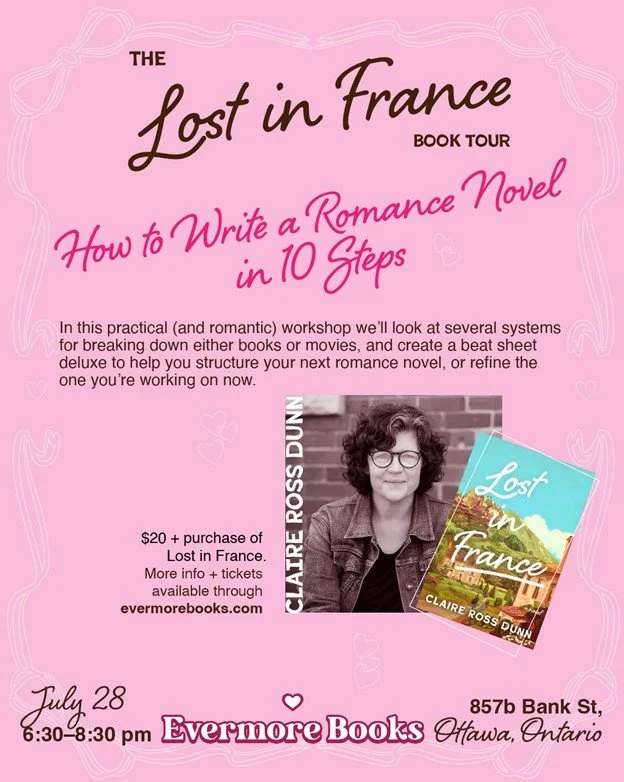
Next up is a 2-hour romance workshop at Evermore Books in Ottawa. This is really fun because it allows my structure nerd brain to share the way it works in this particular genre: romance. This event is sold out, but if you are a bookseller or reader interested in booking the workshop, please contact me and I can bring the workshop to you.
Where’s Waldo?
I love seeing where people are reading Lost in France. If you haven’t already, can you share a photo of you reading LIF wherever you are? Share it on social media and tag me or share it with me directly via my website so I can create videos of people reading the book.
An Inspiration for Lost in France: Filmmaker Liz Whitmere
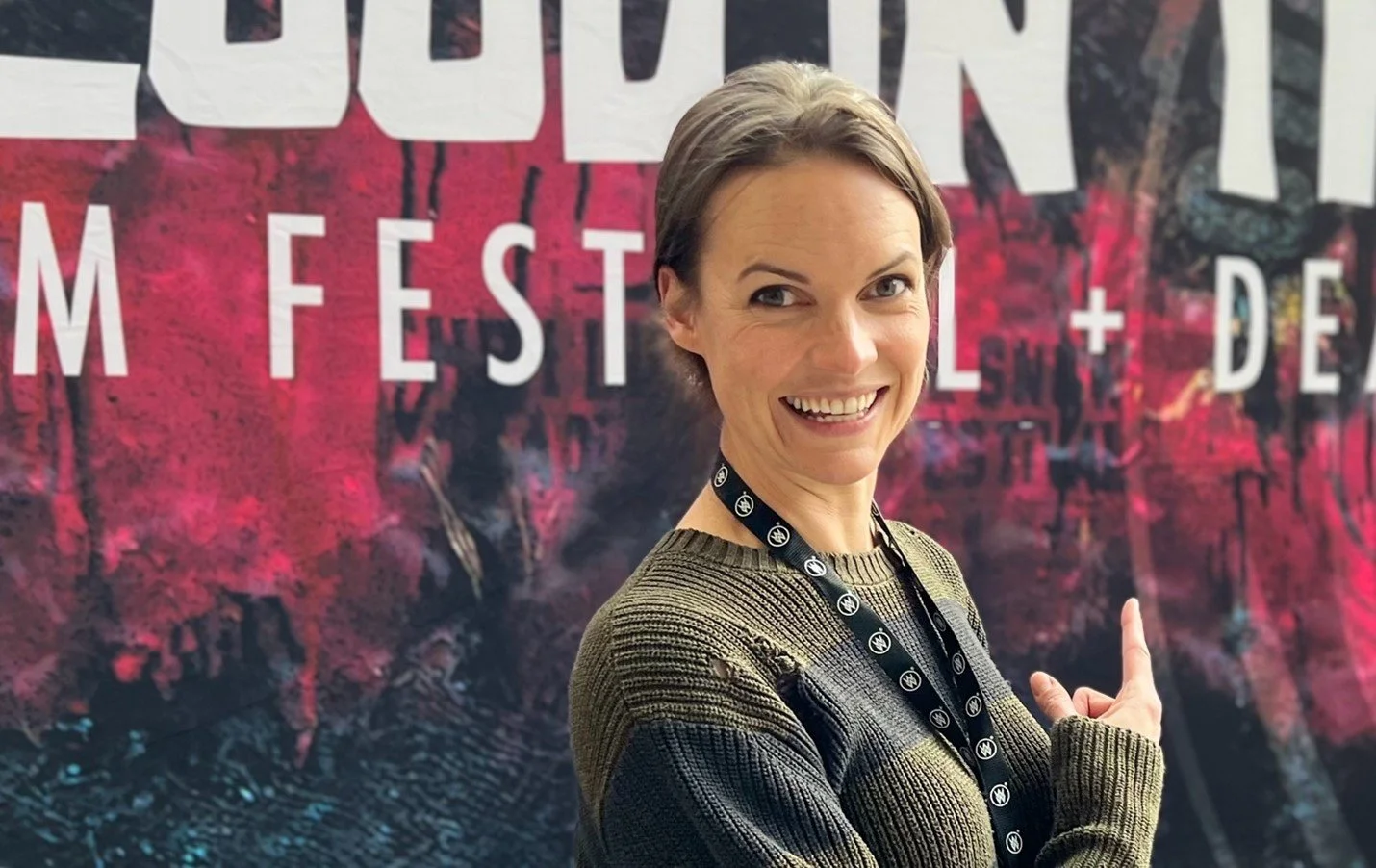
The lead character of Lost in France, Marlow, is an overworked and underpaid film festival staffer in Toronto who trained as a filmmaker. But one thing led to another, and she has yet to make her first feature. One of the ways she keeps her dream alive is to make little films on Instagram. This idea was inspired by my award-winning filmmaker friend Liz Whitmere.
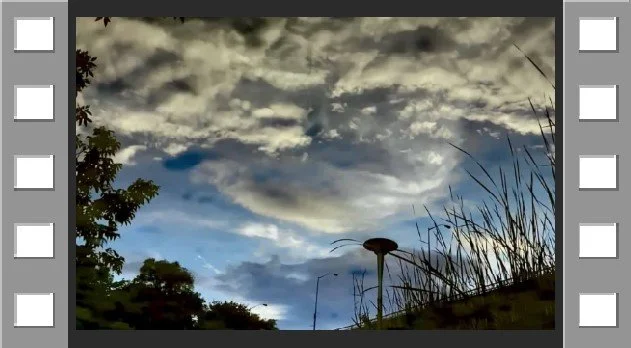
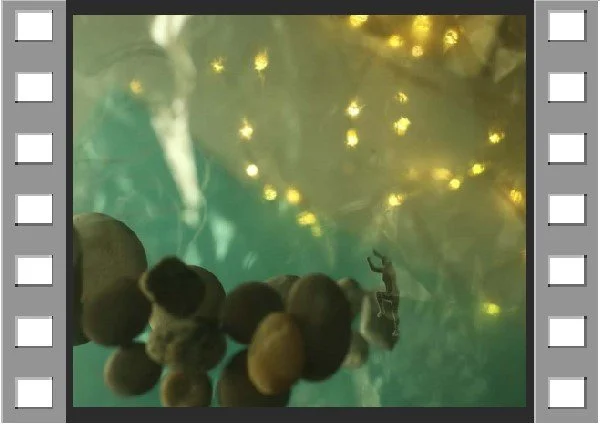
I met Liz while she and I worked together on ZARQA, a comedy series created by Zarqa Nawaz. Liz is an actor, director, writer, producer, editor, casting director, and probably other things I don’t know about. While she goes about her life, juggling many creative balls, she shoots the most exquisite tiny 10-second movies on Instagram—gorgeous moments catching the world reflected through a puddle, or an extreme close-up of a leaf, or things blowing in the wind in slow motion, or a stop motion she’s created. I’ve been so taken with this expression of Liz’s art. To see a few of these tiny movies, check out her IG account.
Here are two delicious examples:
I thought I’d interview Liz here so that, if you’ve read Lost in France, and were curious about this aspect of Marlow’s character, you’d know the inspiration behind it.
CRD: Can you tell us a bit about yourself? You’re a quintuple maybe more threat—actor, director, writer, producer, digital series consultant… am I missing one of the insane number of things you’re good at? OH RIGHT, CASTING DIRECTOR. Anything else?
LW: Oh gosh. I feel a sort of vertigo when I think about all the things. I used to dance, there was a (thankfully brief) minute where I wanted to be a model, I spent some time in the standup comedy and improv worlds in Montreal… oh and I ran a functional fitness gym for a while. But that’s all ancient history. At the moment I’m focused on story-making in various ways.
CRD: You started out (and still are) an actor. When did you decide you wanted to shoot movies/TV, and why?
LW: Ok, so… an acting coach told me once that the only authentic human interaction I could engage in was via scene study or performance. Which… ouch. But. There was maybe a grain of truth there. My love of performing came from a really deep desire to understand human behaviour, and scripts provide a framework within which to explore conflict, drama, comedy, fear, and danger. A script (or a stage) is a safe sandbox. The job of an actor is to step into the sandbox and take risks so the audience can experience that risk at arm’s length. An actor’s job is also subject to all kinds of outside decision-making that I don’t get a say in - and being a woman in this industry can be harrowing. I got pregnant with my first child at 27 and was immediately dropped by my LA agent. Auditions dried up. My union’s mat leave coverage was based on the 12 months prior to giving birth, and 60% of $0 is $0. I felt like I had been dropped down a well, professionally speaking. I got really sad, and then I got really mad. Because I’m stubborn, I harassed a director friend to make a short film with me until he finally caved. I didn’t know how to produce, but shockingly couldn’t find a producer willing to work for free, so had to learn on the fly while also performing in the project… and I loved it. Exhausting, overwhelming, constant problem solving; I felt so engaged and alive! That’s when producing started taking a front seat. I produced for free/honoraria on other people’s projects to learn as much as possible. It felt like assembling the world’s coolest tool kit, and it was wonderful to discover how many parenting skills translate directly to producing. So many things become possible when you know how to make the big machine go.
CRD: You’ve made some lovely shorts and shot some great episodic—can you tell us about those experiences? They’ve won awards, right? (You so fancy.)
LW: You are very kind. I am truly the opposite of fancy - just a big ol’ nerd who likes making stories and pictures. The trajectory from producing to directing was an interesting process of self-discovery. Remember when I said I felt so engaged and alive producing that first short film? It turns out what makes me feel engaged and alive is being on a very steep learning curve. Once I gathered my courage to start directing, the learning curve became my favourite angle of all - almost vertical. I love visiting the absolute limit of my capacity. There’s a particular type of flow state that pushes every other consideration - food, sleep, geopolitics, the eventual heat death of the universe - to the distant margins. At risk of sounding un-Canadian, I can share that projects I’ve had a hand in have been nominated for all kinds of delightful recognition, from the Director’s Guild to the Canadian Screen Awards and beyond. It’s so encouraging to release work to a warm reception! I will admit that the awards world feels like an imperfect measure of artistic merit. I’ve sat on juries, and I know just how subjective all of those decisions can be. I prize direct viewer feedback over any statue or certificate.
CRD: Tell me about some favourite film/tv/digital media projects you’ve worked on in any one of your many capacities and why you loved it.
LW: Anytime I’ve worked with you has been delightful. I’ve learned so much about grant writing, production politics, story mechanics, directing-for-hire, and on-set dynamics thanks to your influence. If we’re talking about my creative babies, I’d have to say COLD takes the cake. COLD is the story of Jane, who died sometime last week but didn’t notice. The finished film is almost exactly what I’d hoped for. I felt so fortunate to have a team who were willing to jump into this surreal dead woman’s world on the basis of a one-paragraph soft pitch. On set, I remember shooting a scene between a condescending doctor played by Canadian treasure Peter Keleghan, and Jane played by Canadian treasure Melanie Scrofano. In the scene, Jane is trying to explain to the doctor that her body is literally falling apart and he doesn’t take her seriously. Every female crew member gathered around the monitor, trading stories of medical dismissal and misdiagnosis. It’s nice that the movie turned out well, but even if it hadn’t - that moment was peak filmmaking cathartic story-as-community. It set the bar for what I want to accomplish on future projects.
CRD: Do you have a favourite movie? Can you tell us what it is and why?
LW: I always draw a blank for this question. Suddenly my brain decides I’ve never seen any movies and have never held an opinion on anything. That being said: EVERYTHING EVERYWHERE ALL AT ONCE is glorious, playful, surreal, profound, and visually beautiful… and was made in the kind of scrappy, shamelessly enthusiastic, fearless way I aspire to emulate.
CRD: Tell us about shooting these delectable 10- or 20-second pieces on IG. As you know, I’m obsessed by them. They’re just SO good, they’re inspiring—they for sure inspired me enough to make them a thing Marlow, Lost in France’s lead character, does in the book. They’re atmospheric, they are full of emotion, they are gorgeous. What do you use to shoot (is it just your phone, is it more?) What inspires you? What do you hope viewers take away from them?
LW: First of all, I am SO FLATTERED that this element of my weird little creative life has made its way into your wonderful book. I never have a proper camera with me, and the opportunities to capture are so fleeting - sometimes I have only a second or two to catch the light before it changes. I shoot exclusively on my terrible, obsolete iPhone SE.
The thing I’m aiming for with those little videos is a feeling of transformation. There’s this full body electric thing that happens when an image is just right - and when the image is just right, and I am able to capture it, I feel like I’ve just tucked a gold nugget into my pocket. A mud puddle is a portal to another version of the world, when viewed from the right angle. A streamer blowing in the wind, if you shoot it at a high enough frame rate, appears to be moving underwater. A rock thrown into the sea becomes an alien gravity paradox when you flip it upside down. Water becomes undulating mercury under the right weather conditions.
CRD: What are you working on now?
The feature version of COLD is in process… but I’ll admit I had to shelve it for a while to do real-world make-a-living work. I also went for a sleep study a little while ago, and I have to say it was one of the weirdest experiences of my life. I’m percolating on something set there.
CRD: Have you been to France? And if so, what’s a sight, restaurant, experience—even if it’s a small thing—that you would recommend to others, and why? If not, do you have a place you’d like to go?
LW: I’ve been to France twice - once as a young teen with my mom, and once as a new mom with my husband and in-laws about 15 years ago. If you have the chance, get thee to the French Alps - ideally somewhere with a view of a plateau with a lake. If you can arrange to be there as a storm approaches, and if you’ve chosen a good lake, the minerals in the water will almost glow teal as the sky darkens. If you happen to be traveling with a precocious 18-month-old, I strongly recommend handing them a baguette approximately as tall as they are and witnessing the pure comedy of scale that ensues as they experience really, really good bread.
CRD: Do you have any books or movies set in France that are your favourites? What did you like about them?
LW: I love the movie JEUX D’ENFANTS (English: LOVE ME IF YOU DARE). It’s set up as a romantic romp that spirals into something weird and obsessive and still somehow funny.
CRD: Where can people find you online, social media, etc.?
LW: I’m on Instagram @LizWhitmere and Bluesky @lizwhitmere.bsky.social My website is www.lizwhitmere.com
**
“Don’t be fooled — writing a romance novel is a ‘deceptively difficult’ feat”
Zoe Whittall was a guest on CBC Radio’s Q on July 9 to discuss her new novel, Chasing Summer, and I found her interview very interesting. (As a sidebar, Zoe and I don’t know each other but we have some similarities: she comes from screenwriting, like me. Her book Bottle Rocket Hearts made the Globe and Mail Best 100 books list in 2007, and my first novel, At Last Count, made the list in 2022. Chasing Summer is set in Prince Edward County, which is only one ferry ride away from Amherst Island, where At Last Count is set.
She has published five novels and three poetry collections to date. She’s so prolific. You can listen to her interview on Q here.
I agree with a lot of what she said during the interview, like this: “It’s so difficult to be emotional without being sentimental, and to have sparky, funny, flirty dialogue that isn't corny — there's a really fine line between funny and corny. Like pop music, people think writing a pop song is very easy, but it's really deceptively difficult to write a hook and to really get it right. And I feel like the same is true for romance novels. Like, they're actually quite difficult to write well.”
Chasing Summer is now on my (absurdly tall) TBR pile. I love supporting fellow Canadian writers and also love that this is set in a Canadian location.
Upcoming Events
So yes, July 28, as mentioned above, I’m giving a “How to Write a Romance in 10 Steps” workshop at Evermore Books in Ottawa.
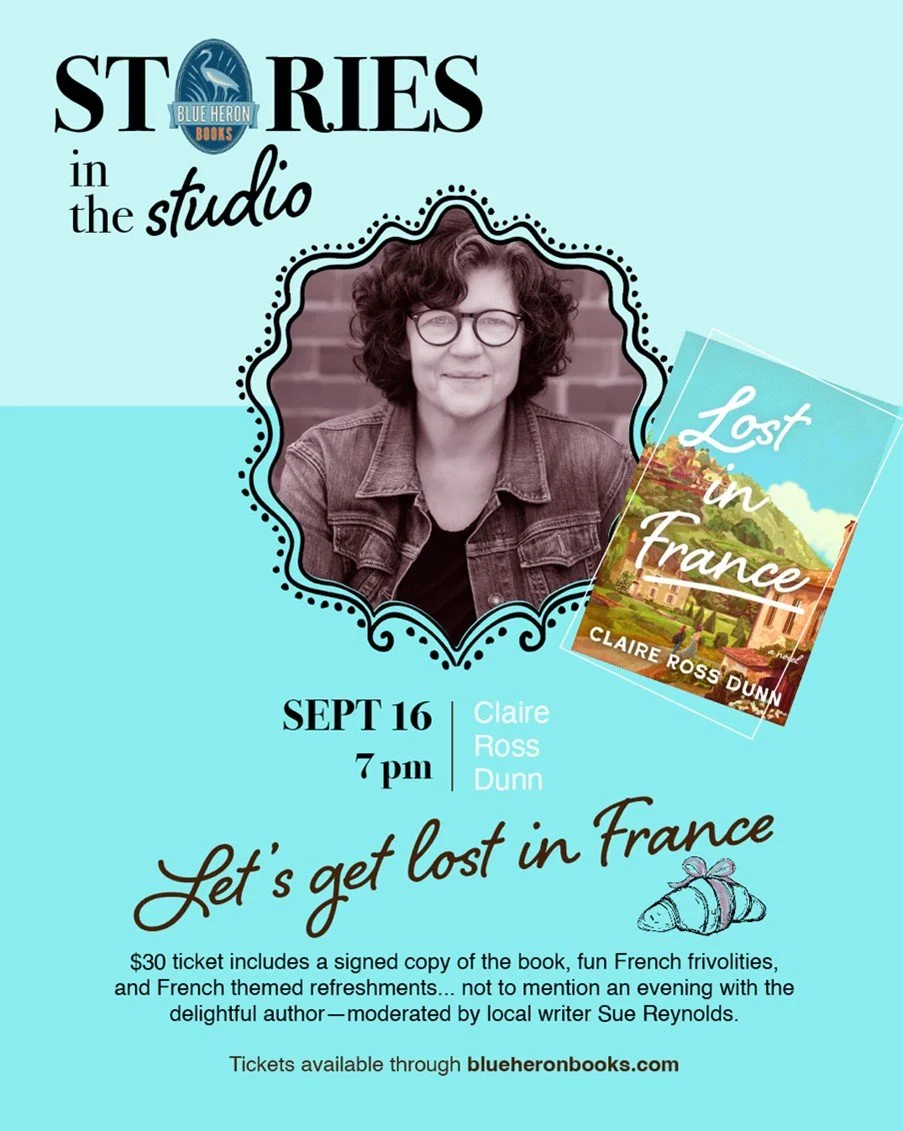
Sept 16 I’m at Blue Heron for a Let’s Get Lost in France” evening. There will be a book-themed photo booth, a make-your-own bookmark station, tea, coffee, and French sweets, and an author chat with mw hosted by the ever-wonderful author and writing coach Sue Reynolds. For tickets, go to: https://blueheronbooks.com/events/5861720260916
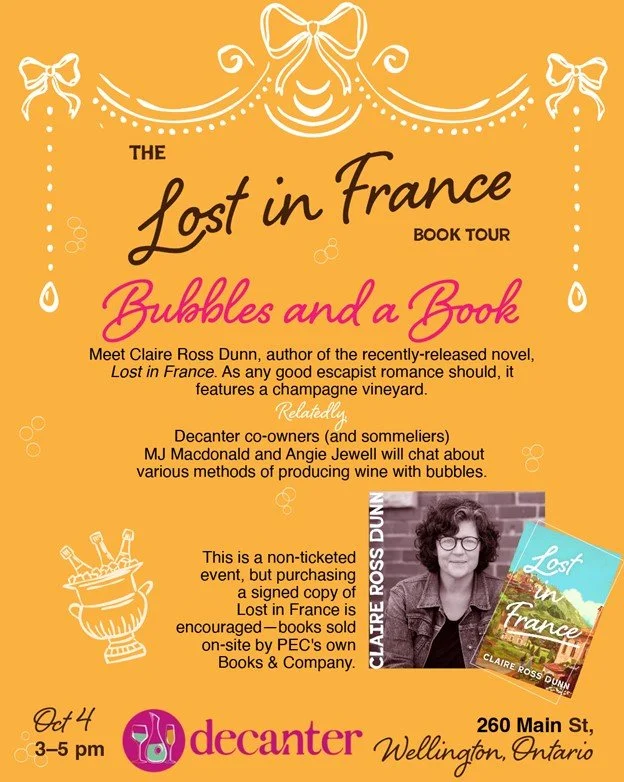
And October 4, 3-5pm, I’ll be at Decanter in Wellington, Prince Edward County for “Bubbles and a Book.” Decanter co-owners MJ Macdonald and Angie Jewell will chat about various methods of making wine with bubbles, and I’ll chat about Lost in France. Picton’s own Books & Company will be on hand to sell books.